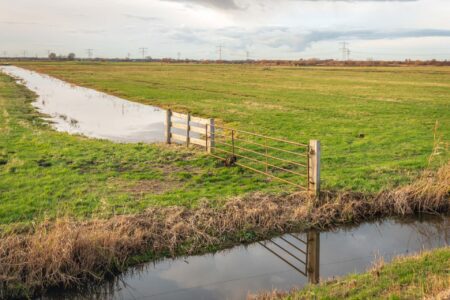
The annual inspection is an essential tool in a water board’s oversight activities. Well-maintained waterways are crucial for reliable drainage and flood control. The water board is responsible for ensuring compliance with maintenance obligations; the maintenance itself is the responsibility of landowners and tenants.
The traditional approach is largely based on physical inspections in the field. Waterways are systematically inspected without any prior knowledge of where risks or anomalies actually exist. This leads to:
- A major structural deployment of capacity
- High implementation costs
- Limited advance guidance
- A supervisory process that is primarily reactive in nature
In practice, a substantial proportion of the waterways inspected are found to be in good condition. Nevertheless, a considerable amount of time and budget is devoted to this effort each year.
As a result, the balance between effort and results is increasingly being called into question. This is especially true in a context of growing pressure on capacity, rising costs, and higher expectations regarding efficiency and transparency.
This raises a fundamental question: is it still justifiable to monitor everything when only a portion actually requires attention? And how can oversight be kept effective, efficient, and future-proof in an era of limited capacity and rising costs? Modern technology offers new opportunities to make oversight smarter, more targeted, and better informed.
From manual fieldwork to data-driven management
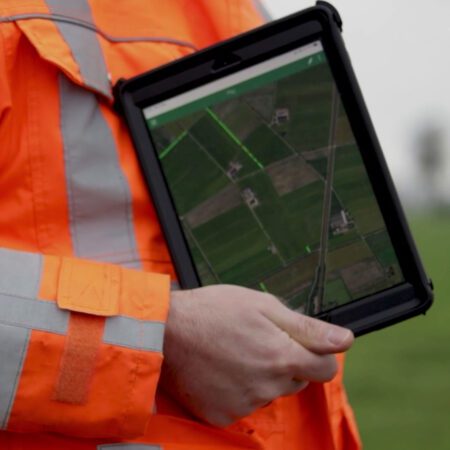
Digital inspections are all about gaining insights before heading out into the field. Instead of physically inspecting every location, a selection is first made of waterways that may require maintenance. Up-to-date visual data and smart analyses provide a well-founded overview, after which only relevant locations are assigned for inspection.
The result: inspectors focus on anomalies and exceptions rather than routine tasks. All findings are recorded centrally, making the process transparent and manageable.
This approach creates a seamless process from identification to follow-up: from the initial assessment to notification of the site manager and completion of maintenance. No separate lists, no scattered information—just a single, clear, and manageable inspection process.

Simple
Fully set up and ready to go; no specific technical knowledge required

Quick
Based on the data, you'll know right away where to check.

Flexible
Inspect from your computer screen and mobile app.

Everywhere
Work in the cloud without straining your IT systems.
Lower costs, greater control, more transparent
For a water authority, digital inspections deliver immediate value. In open areas, the number of physical inspections can be drastically reduced. This means fewer field assignments and lower operational costs. At the same time, it provides better insight into compliance and progress. Management and the board have access to substantiated figures rather than assumptions. In addition, the deployment of personnel changes. Inspectors devote their time to situations where their expertise is truly needed. The work becomes more focused and substantive. Equally important: the process becomes more transparent and easier to explain—to the board, to partners, and to property owners. Oversight becomes not only more efficient but also demonstrably more effective.
- Fewer physical inspections: in open areas, up to 80% of waterways can be excluded from physical inspection
- Targeted use of expertise: inspectors focus on situations where their knowledge truly makes a difference
- Greater control and transparency: management and the board have access to substantiated figures, not assumptions
- Faster processing: from assessment to reporting and follow-up, the process is streamlined and digital
- Future-proof oversight: the process becomes scalable, reproducible, and less reliant on individual expertise
Future-proof review process
Digital inspections are therefore not a technical innovation, but a strategic choice. Fewer inspections for the sake of inspection. More focus on risk, compliance, and results. Exactly what future-proof water management requires.
The digital inspection process at WDODelta
For years, the process has been exactly the same: every fall, more than sixty employees of the Drents Overijsselse Delta Water Authority (WDODelta) head out into the field to check all the ditches in their area for proper flow. This process is called the inspection. Now, thanks to the screen-based inspection, that same inspection looks very different. Erik Pander, a supervision and enforcement officer at the Drents Overijsselse Delta Water Board, explains how this works in practice.

Ready to get started with a digital inspection process?
At IMAGEM , we IMAGEM water authorities at every stage of the inspection process: from collecting and analyzing satellite imagery to identifying the waterways that require maintenance.