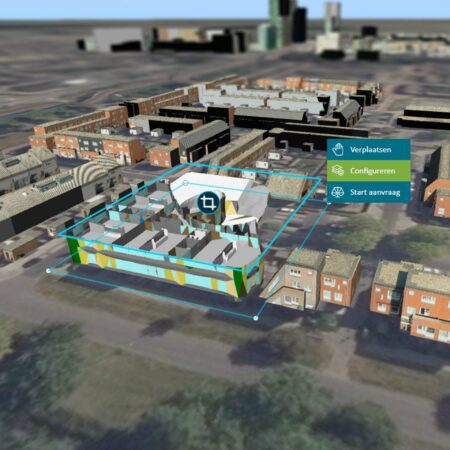
It is important to start now so that we can address the challenges of tomorrow. Our goal is for every municipal department to launch an application by 2030 that is part of a comprehensive, knowledge- and policy-driven information system, in which data and information are directly integrated into work processes.
The Environment Act calls for an integrated approach. This means examining the interrelationships between policy areas and balancing different perspectives and interests.
— Environmental Information Center
Key Issues
(Source: Environmental Information Center)
Integrated working is about identifying and weighing the various interests involved—and discussing them together. These interests come into play at different levels:
- in the area
- within government agencies and between government agencies
- between the initiator, the government, and other stakeholders
- across policy areas and within and between organizations
- between policy steps (policy, permitting, oversight, enforcement)
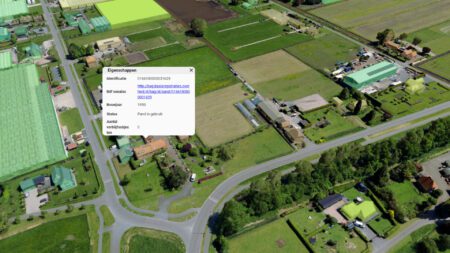
How a policy-driven digital collaboration environment works
A policy-driven digital collaboration environment fosters a more systematic approach, thereby optimizing current work processes. This approach also helps identify potential bottlenecks and consequences in a timely manner, optimize the use of space, and reduce failure costs.
The projects are integrated into the shared information platform along with related data, knowledge, policies, and scenarios—a foundation that is essential for the long term. These individual projects serve as the basis for a gradual scaling-up process, ultimately enabling us to address societal challenges more efficiently and effectively.
Planspace and ensures the process by integrating the knowledge- and policy-driven digital collaboration environment into the workflow.
What is an integrated, knowledge- and policy-driven information system (Planspace)?
Planspace a knowledge- and policy-driven digital collaboration environment that connects all stakeholders and provides support for:
- Visualization of plans: 3D visualizations make it possible to understand the impact of new developments on the living environment. 3D provides more context and perspective.
- Scenario simulation: simulating the effects of different policy choices and selecting the best option.
- Comprehensive review: assessing whether plans comply with all policy guidelines (objectives, goals, measures, etc.) and technical requirements across the various domains.
- Engaging stakeholders: Citizens and stakeholders can provide feedback on plans and developments through a digital collaboration platform.
- Faster decision-making: By consolidating all information in one place, decisions can be made more quickly, effectively, and holistically.
- Implementing integrated policy: Bringing together data from various (siloed) disciplinary systems creates connections between different policy areas and stakeholders through a virtual collaboration environment designed for comprehensive stakeholder analysis.
The Benefits of Integrated Collaboration

Preventing delays
Faster insight into feasibility, even before the permit is applied for.

Better decision-making
Comprehensive insight into cross-domain objectives and scenarios.

Controlling costs
Reduction of failure costs: Through integrated planning and simulation, risks are minimized and failure costs are reduced.

Integrated area development
Linking functions, stakeholders, interests, and funding streams in the development of an area.
The strength of this information system and method lies in the following aspects:
- The integrated and multidisciplinary approach: We view the city as a complex whole, in which all policy areas and stakeholders are interconnected.
- Knowledge and policy integration: We collaborate with knowledge workers and domain specialists and utilize modern technology to articulate knowledge and policy.
- Simplified insight into objectives and opportunities: A powerful tool that will help achieve objectives (visions, strategies, and policies) and mitigate risks
- Stakeholder engagement: collaborative development and insight foster support and understanding for projects.
- Transparency: Making policies, visions, and strategies transparent improves the policy-making process. The objectives of a specific area, plan, or theme can be clearly and simply situated within a broader urban context.
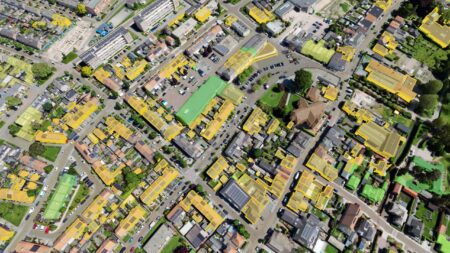
IMAGEM: The Power of Simulation
IMAGEM Planspace Simulator, a digital twin integrates design, data, and computational models/simulations. By incorporating subsurface data and settlement calculations into the system, it generates scenarios that identify whether residential construction projects are at risk or not. These scenarios can be immediately analyzed and visualized, enabling faster and more well-informed design and decision-making.
Ready to get started with a knowledge- and policy-driven digital twin?
IMAGEM municipalities with data-driven insights, smart visualizations, and practical models. Would you like to get started with a knowledge- and policy-driven digital collaboration environment within a digital twin learn how to apply this in practice in your municipality?
Please contact Niels or send us a message via our contact form.