
All transformations are difficult. They often hurt a little at first, before things get better. The digital transformation brought about by the Environment Act for municipalities is no different. The shift toward a customer-focused organization with fewer rules goes directly against what we’ve always done. But there is another way.
We live and work in this environment and find ourselves constantly surprised by changes we could not have predicted. The speed at which this happens can be overwhelming. On top of that, the world is becoming more complex due to its interconnectedness and overlapping areas. To maintain control, we’re accustomed to creating new rules. We also call this policy. Stakeholders struggle to draft these rules in a way that is both proportionate and feasible. And that’s especially difficult in a complex, rapidly changing world.
In order to provide customer-focused services—such as processing applications for dormer windows—the municipality must shift its approach from an automatic “no” based on regulations to one that advises applicants on how to proceed toward approval.
— Wouter Brokx, CEO of IMAGEM
People First
If we take a closer look at the municipal organization, we see a major shift there as well. Case workers must become advisors. To make the transition from a service counter to an advisory role, the organization must, for example, adopt a contextual approach to enforcement. In other words, to be able to offer customer-focused service—for example, when applying for a dormer window—the municipality must shift from a “legal no” to “advising toward a yes.” The DSO for the Environment Act is a digital service window based on compliance with regulations. Following the difficult rollout of the DSO, the transition to customer-focused advising will be the real challenge.
A society that puts people first—or, in organizational terms, one that emphasizes “customer-focused service”—actually requires fewer rules. This creates a tension with current process-oriented systems. Instead of focusing on compliance with rules, goals and outcomes must guide decision-making.

Change is painful
That’s very different from how we’ve done things up until now; it’s a shift toward conscious, adaptive work. That’s digital transformation—which, ironically, is primarily an organizational challenge. Because transformations are difficult; they often cause more pain at first before things get better. But doing nothing is essentially just postponing major damage, with no prospect of improvement.
Fortunately, we realize that we can no longer do this alone. At IMAGEM , we IMAGEM that living together also means working together and governing together. We are the government; as citizens, we are all stakeholders and have a stake in this. This is the country, the city, and the village where we live and where our children are growing up. So it concerns us all.
To enable the digital transformation toward this new reality for municipalities, we have developed an innovative approach and technology for collaborative decision-making. We have created Planspace . We’ve given it a lot of thought and have been continuously improving it recently. We believe this approach enables the digital transformation to this new reality for municipalities and makes them much more agile and adaptable. Planspace a platform and approach for collaboratively setting goals based on policy and effectively achieving them. We do this in the context of a constantly changing world. It requires a new approach, in which digital collaboration and monitoring tools are crucial for support.
What does that look like?
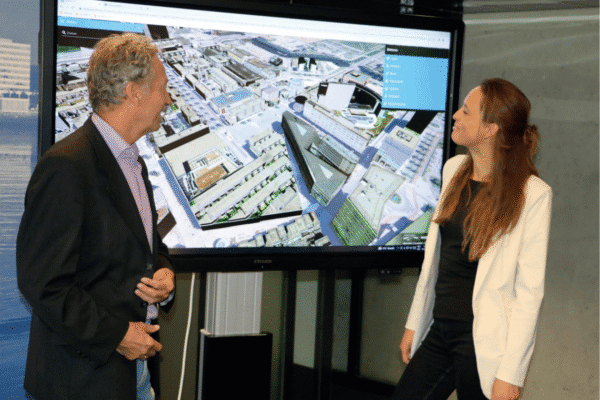
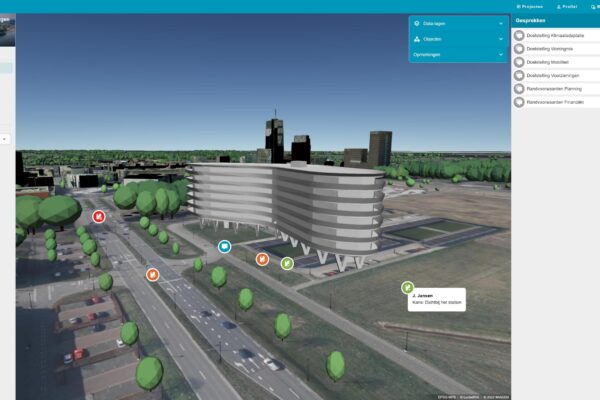
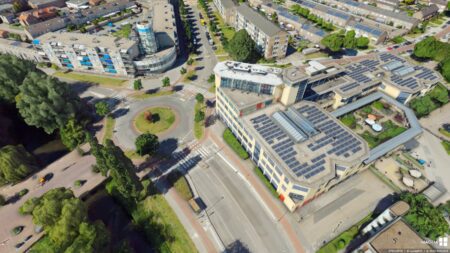
We have developed a collaborative platform for the built environment in Almere. This platform is now being used for joint scenario planning and decision-making on a number of projects in the municipality. Its integration with the digital twin a robust, fact-based visualization, resulting in a shared, reliable picture.
What's changing?
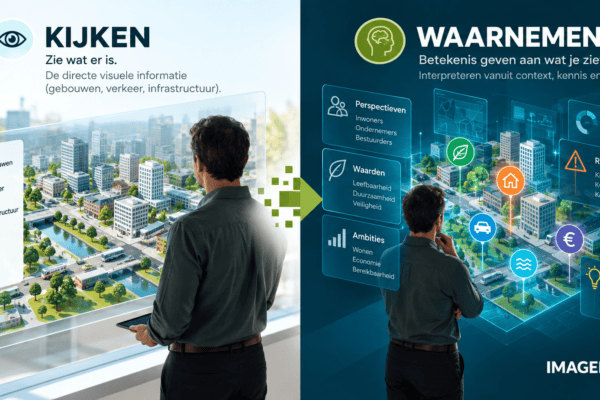
As human beings, we are all active and involved in some way in an initiative, but we often lack a shared understanding of it. After all, we all have different backgrounds, goals, contexts, and perspectives. And those are valuable. Finding and continuously aligning our common ground in this regard is very difficult with the current approach. We see this on a national scale with important issues such as climate adaptation, the housing shortage, and nitrogen pollution. But we also see it at the municipal and water board levels, as well as within organizations and teams.
How can we ensure that all our good intentions actually lead to a scenario that works for everyone and is also proportionate in terms of the effort required? How can we ensure that all the discussions and meetings we hold together are not only useful and inspiring, but also result in a shared vision and a feasible approach?
We believe that we can only achieve this by working together and leveraging technology.
More information
Wouter is the founder and director of IMAGEM. He leads the company with a clear vision, which he effectively communicates to the team through his open and goal-oriented personality. Collaborating on innovative and relevant solutions for clients is what drives him.
Would you like to learn more about this topic? Send us a message using our contact form.
Wouter Brokx
Founder