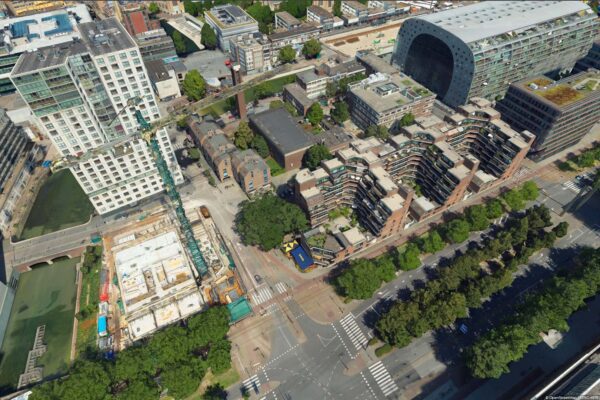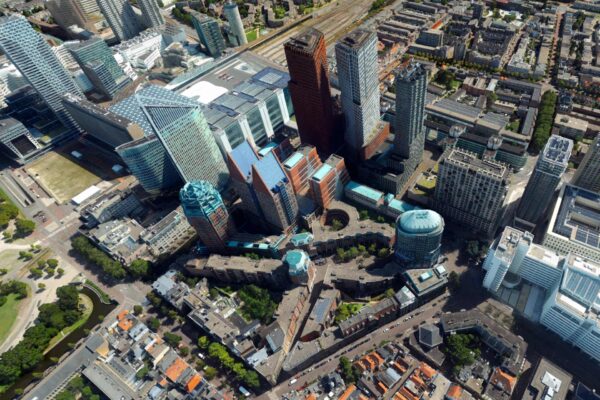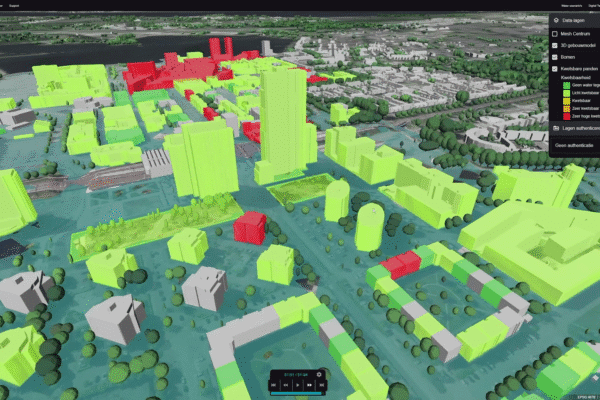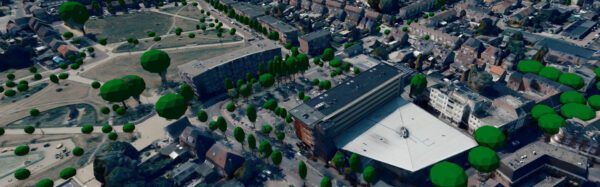
Without a technical team, you won’t have a pilot project or a 3D digital twin. For six months in 2022, Wichard Triepels, Peter Meijers, Jos Robbertsen, and Claire van Proemeren from the Data House worked on setting up, supervising, and developing the pilot. Four different roles with the same goal: ensuring that the pilot runs smoothly and meets the client’s needs. The technical team on the front lines.
Understanding how to collect, manage, and present data as a stepping stone to 3D
As an information consultant, Peter quickly realized that developments in data collection were affecting the entire organization—for example, collecting data using drones instead of surveyors. “We didn’t know what the long-term consequences would be for us, nor what the organization should do in response to these developments. The goal of the pilot was therefore to create more insight for the organization regarding the collection, management, and presentation of data, with the ultimate aim of making the transition to 3D.” They learned a great deal from this. “3D has undergone tremendous development that we can no longer ignore. Moreover, it has clear connections to the work we will be doing in the future.”
The move to 3D
Claire, a data manager, agrees. In the area of data management, she observes that adding more dimensions and incorporating time into the viewer allows errors to be detected more quickly and improves data quality. “The 3D models allow for the combination of different data sources, giving the entire organization a clear and comprehensive picture. A 3D digital twin ensures greater coherence and makes the data easier to understand.” According to Claire, this allows for better and faster application of data, although they still need to work closely with clients to determine how this can actually be applied across different disciplines. In terms of data collection, this also represents significant progress.
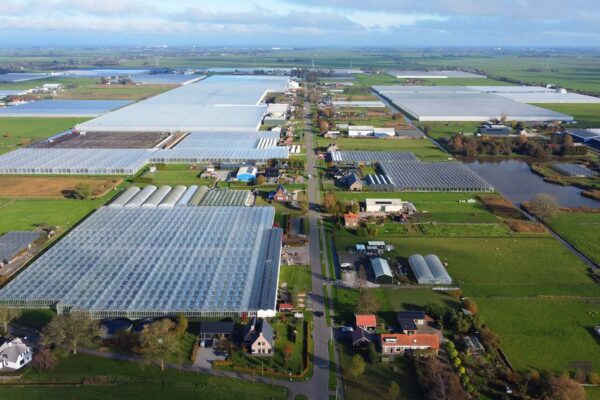
“Using drones makes it possible to create high-quality point clouds, but it’s expensive and requires a shift in approach for traditional surveyors,” says Wichard, BGT administrator and draftsman at the Data House. “A large part of the data collection process can be automated, which naturally leads to less work for surveyors. Of course, manual work will always be necessary, because even a drone can’t capture everything perfectly. There will always need to be people to coordinate; perhaps this means that the surveyor will become a drone pilot.”
The goals
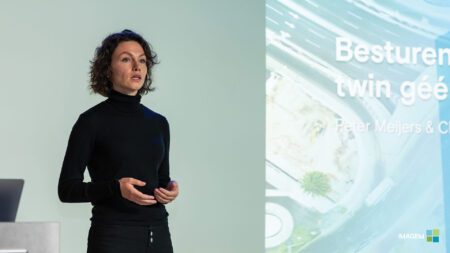
That’s not the only thing that involves change. The transition to 3D can make work better, more efficient, and faster, but it places high demands on an organization. Not only do data collection, management, and reporting change, but so do the customers’ work processes. “Moreover, customer needs are also changing, and we have to adapt to that, which means we’re innovating more. And over time, that in turn changes the customer’s processes,” Peter explains. Close and intensive communication between the supplier and the Data House’s technical department is crucial for this. Everyone who works with data must master how to handle all data from a single starting point. Peter: “The challenge will be to connect with employees at all levels and then provide information tailored specifically to people’s needs. What is the user’s question? We must be able to offer flexible solutions.”
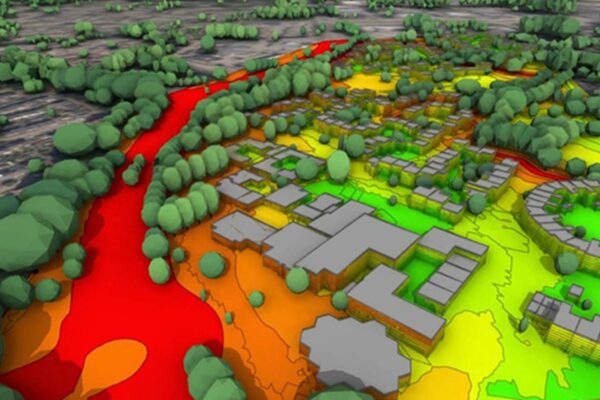
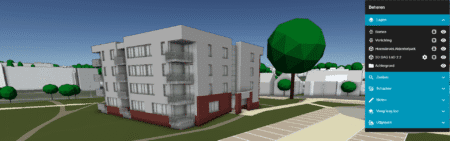
“Our clients increasingly expect us to conduct these kinds of pilot projects. But with 3D, we’re seeing two trends: a digital twin computational models and 3D GIS. It’s not clear to the user what the difference is. So we need to make that clear to the user,” says Wichard. Information displayed in 3D is much clearer. “What you see is what you get.” Think about designing a kitchen. With a 3D model, photorealistic textures, and free-form visualization, it becomes easier to understand. We’re hearing more often that the information looks better and is easier to understand.”
Where is this going?
With the pilot behind them, they are now looking ahead to the next steps. Internally, the Data House wants to continue innovating while also focusing on its day-to-day operations. Striking the right balance is important, according to Claire. “This requires a solid roadmap so we can make steady progress with the 3D digital twin with the work for our clients. They depend on us and vice versa. But we need to take the lead because we’re the specialists. We need to have sufficient capacity for this and demonstrate the added value.” Peter adds: “Once we’re ready to start a project with a municipality, we’ll look at how we can convince other clients as well. For example, by showing examples and working more with 3D ourselves. It has to become a business case. Once we’ve taken a step, we’ll move forward.”
IMAGEM as the supplier in this project. By meeting every two weeks throughout the project, both parties have made significant progress. “We assess on a regular basis how we can support each other and how we can better integrate the technologies.”
Claire, Wichard, Peter, and Jos see the value of a digital twin various ways. “A digital twin ensure that 3D data is properly maintained and managed,” says Wichard. Peter adds, “It’s valuable whenever it leads to better results in our work—often in terms of efficiency, but also in terms of policy, such as accelerating processes and achieving better outcomes.”
A digital twin never finished. But that’s digital twin makes a digital twin successful, according to Claire: “Data must always remain up to date, but requirements will constantly change. So we need to synchronize them effectively and ensure they’re well-aligned. That means staying on top of the latest developments.” A digital twin successful if it continues to evolve.
More information
Niels is the Government Market Manager at IMAGEM. He helps government agencies continuously work smarter and more effectively, and fulfills his role by supporting organizations in solving their challenges. Want to learn more? Send Niels an email or send a message via our contact form.
Niels van de Graaf
Government Market Manager