The Drents Overijsselse Delta Water Board (WDODelta), which is responsible for water management along the IJssel River up to Assen, faces the challenge of ensuring a safe living environment with sufficient and clean water. Due to the size and complexity of this area, it is a challenge to determine whether water management is being carried out properly everywhere in accordance with established frameworks. These frameworks are based on the agency’s own policies in conjunction with those of relevant stakeholders. Together with IMAGEM , they IMAGEM a pilot study IMAGEM how digitization—specifically through the creation of a “policy-aware digital twin—can assist with water level management and improve decision-making processes.
WDODelta research question: Can a policy-aware digital twin support digital twin more effectively?
WDODelta sees opportunities in the digitization of policy and has IMAGEM to conduct a pilot study to investigate whether integrating physical objects (such as waterways) with current policy into a policy-aware digital twin can more effectively support digital twin . This will help them be better prepared for changing conditions. Conditions arising from environmental factors, such as a changing climate affecting dry and wet periods. Conditions arising from spatial adjustments due to housing construction and the energy transition, as well as changes resulting from evolving laws and regulations (water and soil management).
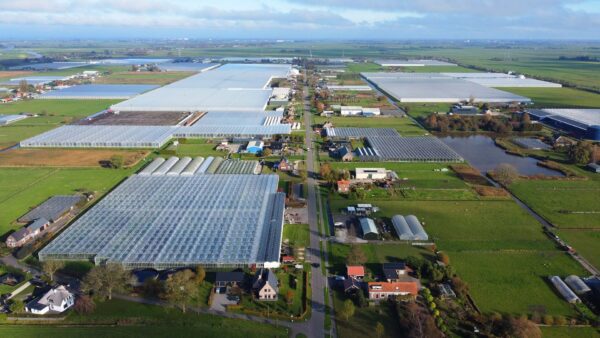
With a policy-aware digital twin , the impact of these conditions digital twin be considered holistically. Decisions are more aligned with the goals of all stakeholders involved, better substantiated, and, moreover, compliance with policy can be demonstrated. As a result, the water authority is better able to act appropriately and effectively, and monitoring and course correction become more feasible. The pilot focused on the water system in the Koekoekspolder area, with the focus later adjusted to also demonstrate the impact of solar parks in the area within the integrated model.
About WDODelta
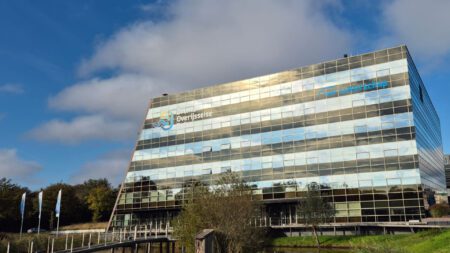
The Drents Overijsselse Delta Water Board was formed through the merger of several water boards and manages a vast area stretching from the IJssel River to Assen. It is responsible for water management and the design of waterways, with the goal of creating a safe and healthy living environment. The board ensures an adequate supply of clean water for everyone, from farmers and businesses to cities and nature reserves. Together with their partners, they work in a frugal and efficient manner to ensure that people in the area can live, work, and coexist safely with water, while taking into account what the landscape can naturally handle.
Integration of policy and the environment
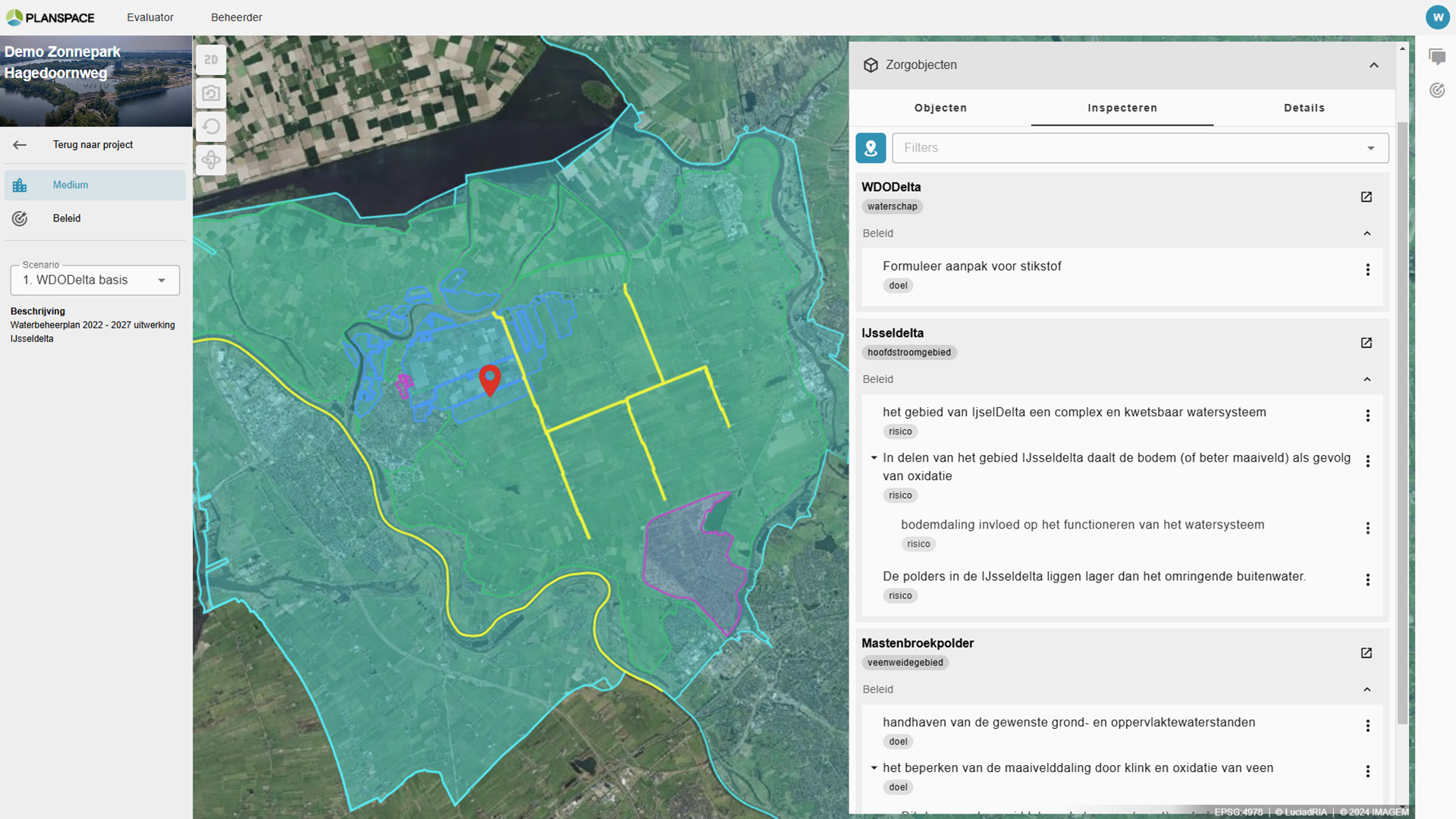
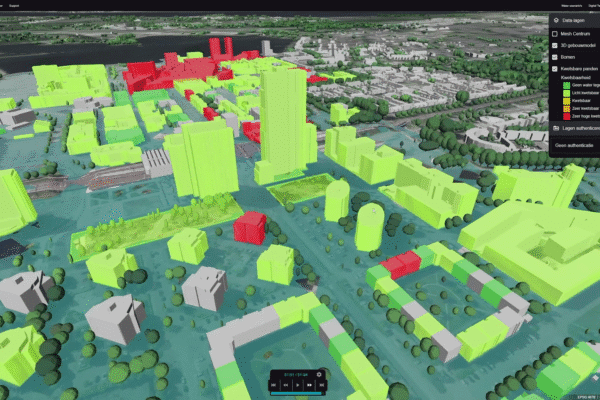
As part of the Planspace, IMAGEM an integrated model that combines policy information with the physical environment. They gathered policy information from various stakeholders by analyzing and annotating documents, reports, and interviews with staff, and integrated this information into a policy model.
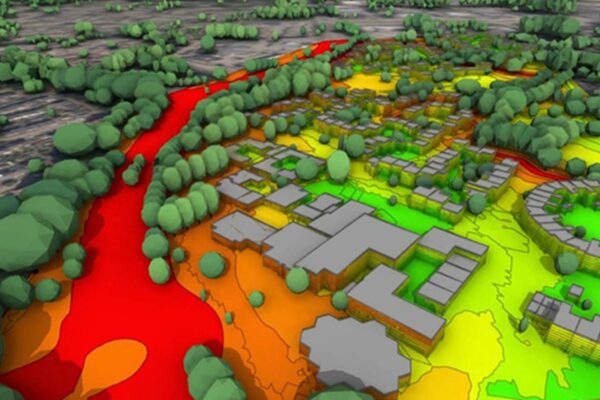
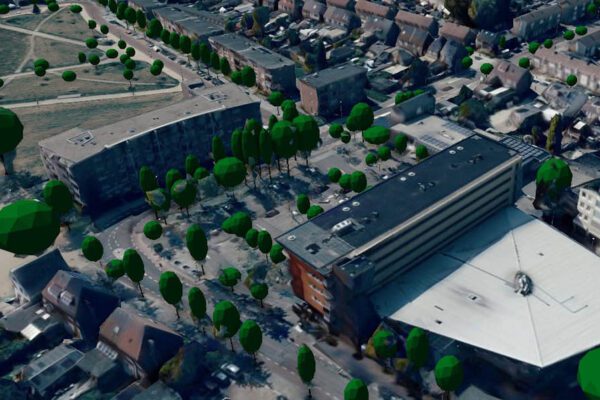
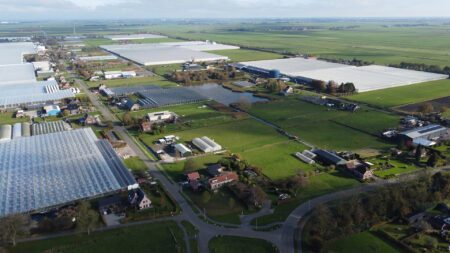
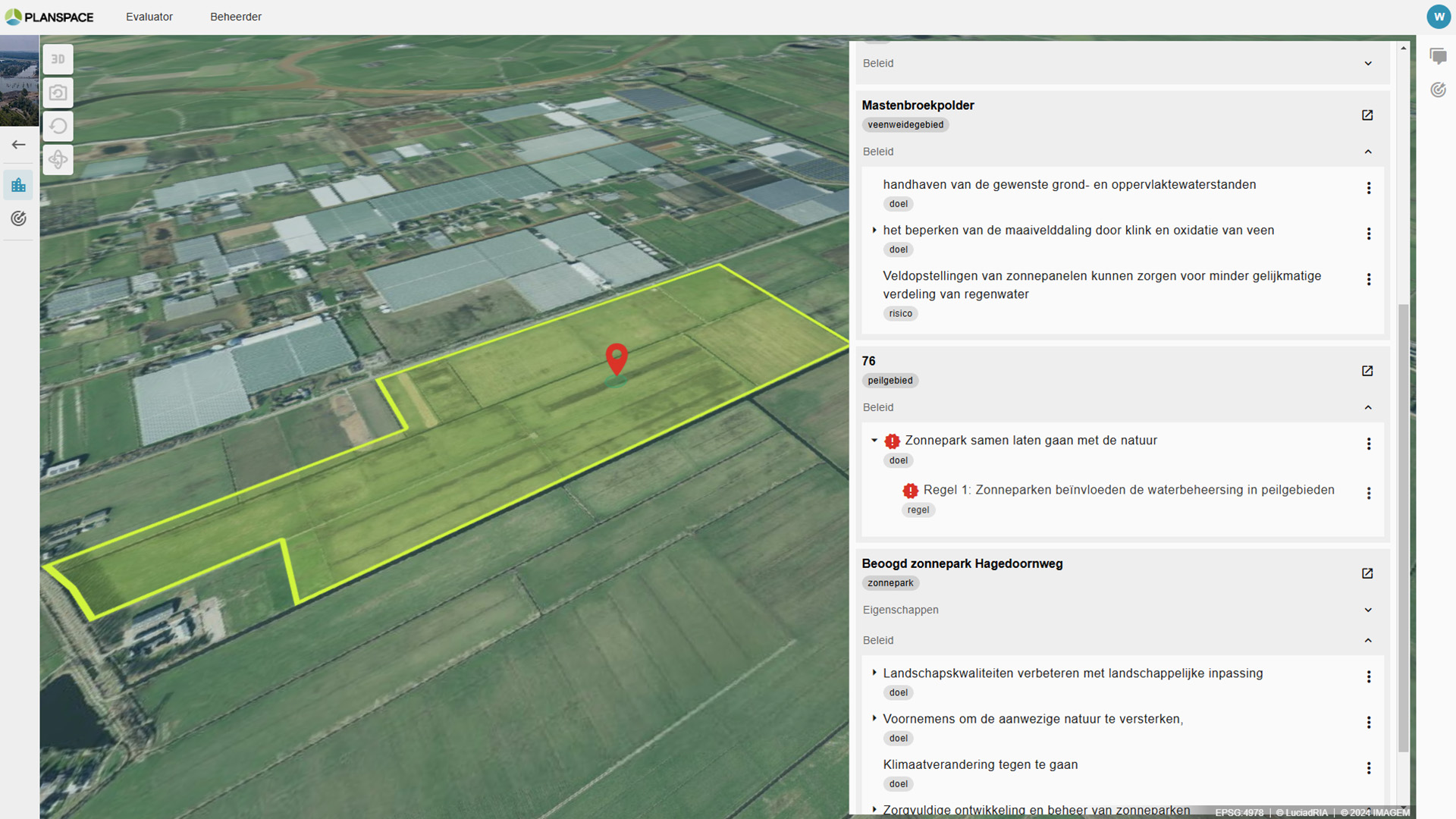
Next, the physical data for the Koekoekspolder—one of the most complex areas within WDODelta—was collected and linked to this model via a shared taxonomy. This resulted in a “policy-aware digital twin”: a powerful digital environment that bridges both worlds and enables scenario planning.
Collaborative decision-making for better results
By combining policy information with physical data on the environment, WDODelta provides a tool that enables internal teams and external partners—such as other water authorities, municipalities, and Rijkswaterstaat—to collaborate in a coordinated manner.
They can simulate and visualize various “what-if” scenarios, making the consequences of decisions visible at an early stage. This makes it possible to work with up-to-date, consistent information and ensures that faster and better-informed decisions can be made on complex issues.
The result is a shorter turnaround time for decision-making processes and comprehensive impact analysis, enabling water management to be organized in a more effective and evidence-based manner.
Preserving and sharing knowledge for future generations
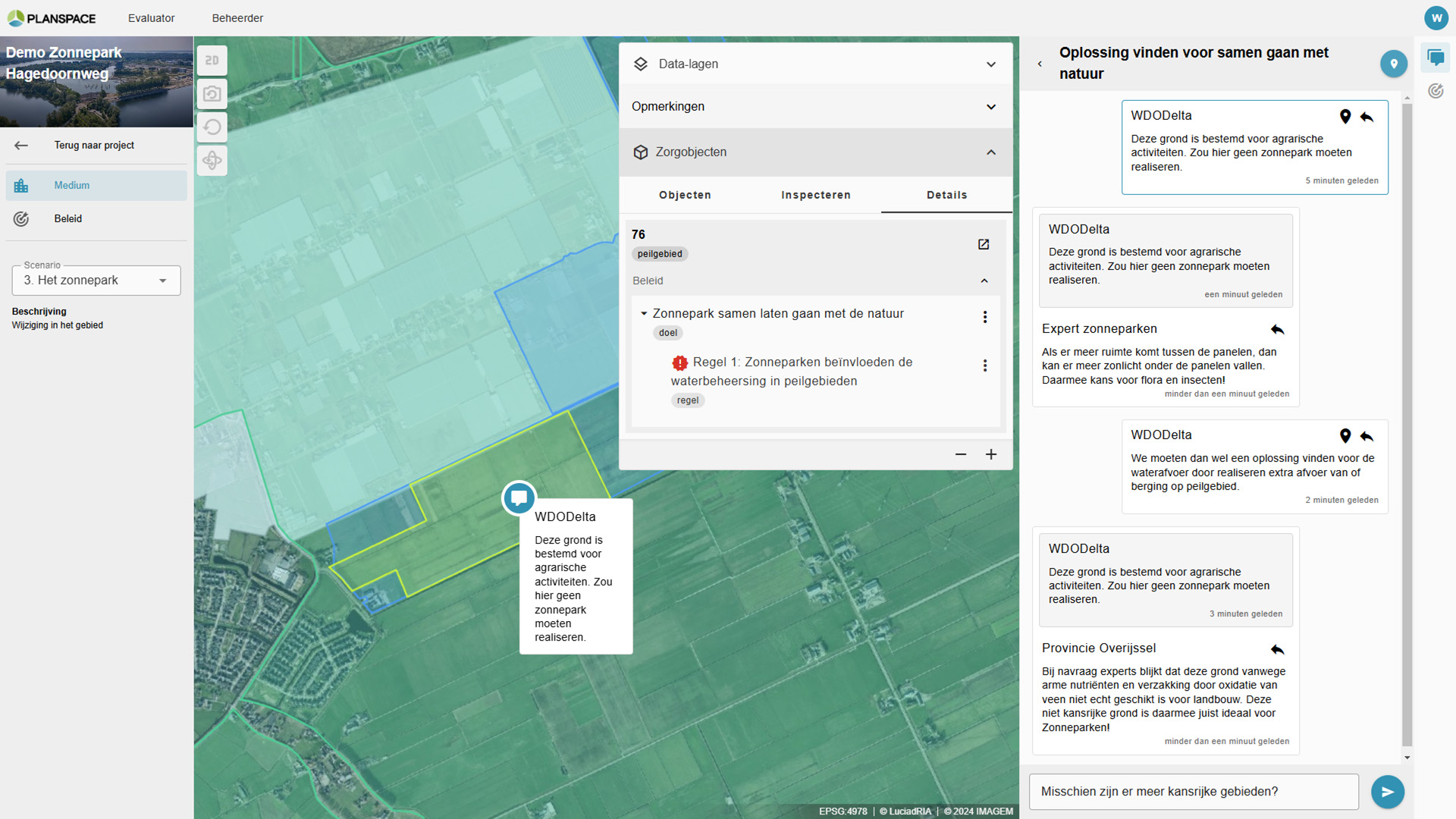
Another key outcome of the pilot is that, through this approach, WDODelta has found a way to preserve knowledge within the organization. Policy information is supplemented with insights from employees, thereby continuously enriching the tool with knowledge and experience. This includes new knowledge and insights, as well as the experiences employees have gained through years of working in the region and with its residents.
By digitizing knowledge, it remains accessible to the entire organization. This enables employees to work more efficiently, easily retrieve information and decisions, and apply existing knowledge in similar situations. This facilitates continuous learning and improvement and ensures that the expertise gained is preserved.
Concrete results achieved
The pilot has demonstrated that the transition to a digital twin policy and the environment offers various benefits:
- Transparent policy: Policy information is visible and accessible to everyone, which contributes to open and transparent policy.
- Comprehensive overview and clear communication: Integrating policy perspectives from various sources and developing a clear taxonomy improves consistency in reporting and communication.
- A comprehensive approach to issues: We take into account not only the interests and policies of WDOdelta, but also the interests and objectives of other stakeholders, residents, and businesses. As a result, decisions are well-balanced and enjoy broad support.
- Better impact measurement: By linking intended impacts to policy objectives, the effectiveness of policy decisions can be directly assessed in practice.
- Identifying information gaps: It becomes clear where there are still gaps in the information provided.
- Sustainable knowledge retention: All knowledge is documented and can be reused in similar situations, which is essential in light of an aging workforce and the departure of experienced employees.
- Improved collaboration and decision-making: By providing a shared view, collaboration processes are improved and decisions are made more quickly.
- Improving asset management: The pilot also explored the common ground between Planspace policy approach Planspace Beleidshuis’s asset management. This highlighted even more clearly the importance of a consistent taxonomy.
The most important lesson for WDODelta—and perhaps for other organizations as well—is to start small within a relevant context and gradually build a solid foundation from there.
What is a policy-aware digital twin?
A policy-aware digital twin an innovative digital model that integrates both the policies and the physical environment of a given area. This pilot project investigated how this combination can help facilitate more informed decision-making by linking water management and spatial planning to current policies, resulting in a more efficient, transparent, and flexible way of working for water authorities and other stakeholders.
More information
Niels is the Government Market Manager at IMAGEM. He helps government agencies continuously work smarter and more effectively, and fulfills his role by supporting organizations in solving their challenges. Want to learn more? Send Niels an email or send a message via our contact form.

Niels van de Graaf
Government Market Manager