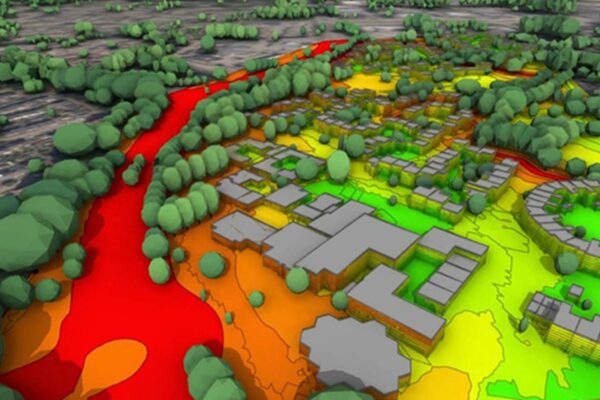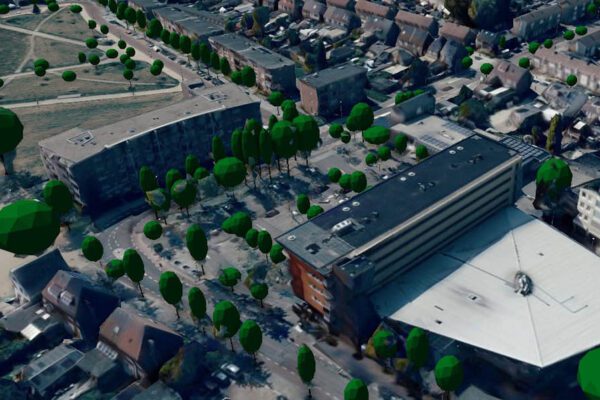
Water authorities are facing a new reality: processes must not only be digitally supported, but also forward-thinking, adaptive, and interconnected. Only in this way can they address the complex challenges of water management—from extreme weather to scarce resources—in a timely and effective manner. WDODelta posed the question: how do we evolve into an organization that truly anticipates, rather than merely reacts? Together, we developed a prototype of a multi-agent digital twin not only records what is happening, but also identifies issues, makes predictions, and provides evidence-based recommendations.
The evolving responsibilities of water authorities
The challenges facing water authorities are becoming increasingly complex and dynamic. This is true not only within the water system itself, but across all business processes: from maintenance and ecology to energy management, permitting, water quality, planning, and implementation. More extreme weather, peak energy demand, pressure on biodiversity, new maintenance concepts, scarce resources, and a tight labor market mean that water authorities operate in a constantly changing reality. The focus is shifting from the question “What is happening now?” to “What lies ahead, and what must we do now to be prepared for it?”
A forward-thinking water management system offers exactly that: a solid information foundation that enables water authorities to respond proactively and with sound reasoning to changes, thereby managing risks and capitalizing on opportunities.
A proactive water management system doesn’t start with technology, but with us: having the courage to let go, clearly defining public frameworks, and organizing decision-making in such a way that we look ahead rather than correcting mistakes after the fact.
— Jeroen Waanders, Innovation Advisor, Drents Overijsselse Delta Water Board
Prototyping: learning by doing
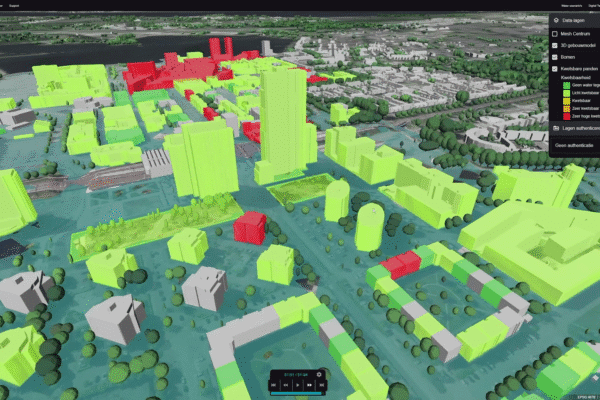
Together with Jeroen Waanders, Innovation Advisor at the Drents Overijsselse Delta Water Board (WDODelta), we developed a prototype based on the surface water system. At its core is a multi-agent model that integrates sensor data, policy rules, and standards. Each specialized agent has its own focus: from detecting vegetation encroachment and sedimentation in waterways via satellite imagery, to identifying illogical water level differences or predicting rainfall peaks and runoff.
The system’s strength lies in collaboration. An overarching agent combines all signals and interprets them using pre-trained AI models, such as segmentation and language models. This creates a dynamic network that constantly reads, predicts, and interprets. A digital twin looks ahead rather than merely recording what is happening.
The added value for the water authority
WDODelta provides a forward-thinking water management system:
- A strong information advantage: rather than analyzing events after the fact, gaining timely insight into what lies ahead and what that means for management and policy.
- Rapid decision-making: the time between detection and action is drastically reduced.
- Resilient organization: processes are adaptive and interconnected.
- Transparency and engagement: citizens and businesses can be actively involved in decision-making.
With this prototype, we demonstrate that the transition to a proactive water management system is feasible. It helps water authorities to manage proactively, organize flexibly, and make informed decisions in an increasingly dynamic environment.
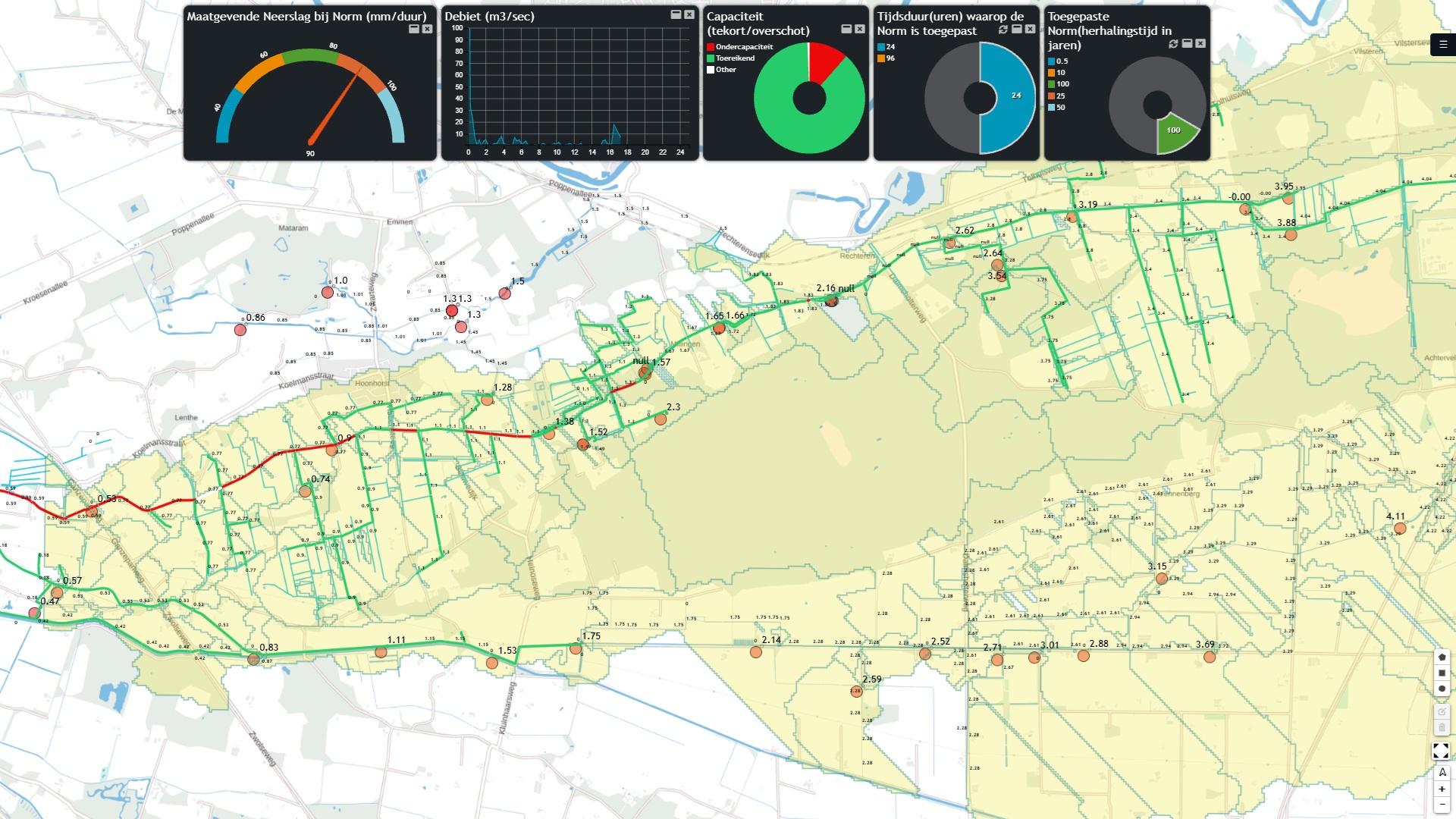
Working closely with the customer
A forward-thinking water management system goes beyond technology. It requires collaboration and well-considered decisions. From the very beginning, Tjip van Dale, a business consultant at IMAGEM, worked closely with WDODelta on the prototype. He translated their ambitions into technical models and, together with Jeroen, sought out solutions that truly work in practice.
Tjip played a hands-on role in developing the prototype: from designing the multi-agent model to integrating sensor data and developing scenarios. He always kept the bigger picture in mind: what does this mean for the organization, its processes, and the people who work with it every day?
Through testing, learning, and refinement, we developed a system that not only shows what is happening right now, but also interprets signals and looks ahead. Thanks to this collaborative effort, the prototype directly addresses both the operational and strategic needs of WDODelta. It’s an approach we’re also applying at other water authorities.
The next step: scaling up and connecting
Now the real work begins. The principle that has been proven in the water system is being scaled up to the entire management area and extended to all operational processes: from maintenance planning and asset management to water quality and ecology, energy management, permitting, investment decisions, and inter-regional cooperation.
The goal is clear: WDODelta is evolving into an organization where processes are digitally supported, adaptive, forward-thinking, and interconnected. The prototype proves that it works. The next step is to use this principle as the foundation for future operations: a single information source that provides timely insights and enables informed decision-making in the face of changing circumstances.
More information
Tjip is a business consultant at IMAGEM. As a consultant, he helps organizations—such as water authorities—find answers and solutions to spatial challenges, where the key lies in the smart application of location intelligence. Want to learn more? Send Tjip an email or message us via our contact form.

Tjip van Dale
Business Consultant