
September 30, 2021 – Climate change is having a major impact on our environment. Rainstorms are becoming more frequent and more intense. We are experiencing hotter summers with longer periods of drought. Sustainable energy management must ensure that the effects of climate change are limited. As a result, more and more governments are aiming to be climate-neutral in the future. The municipality of Capelle aan den IJssel is one of those municipalities and is looking, among other things, at the number of solar panels in their municipality, an important form of renewable energy.
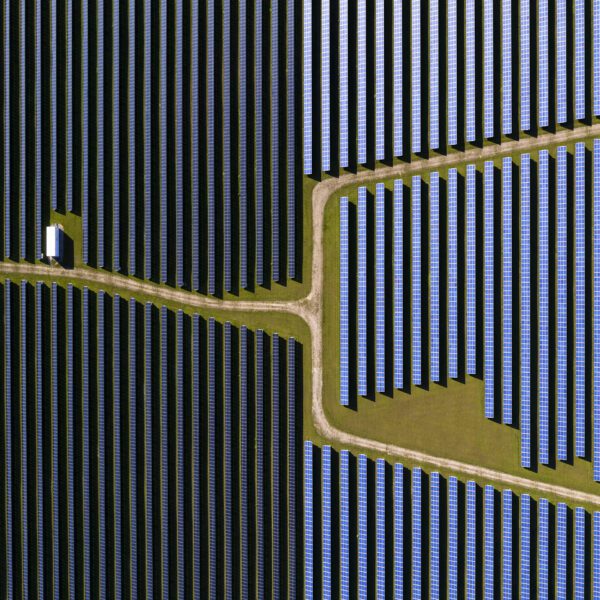
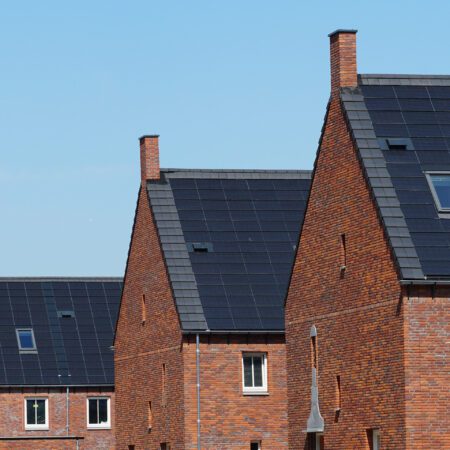
More and more solar panels are being connected to the power grid. Homeowners are increasingly installing solar panels on their roofs, and the number of solar farms is growing. To manage the power grid effectively, it is crucial to know where all these rooftop solar panels are located. The registration of solar panels is therefore mandatory, as this helps improve the reliability of the power grid. Not all solar panels are registered, despite the fact that it is legally required. This can have negative consequences for climate goals and the power grid, such as overloading. Additionally, it is useful to know where there is still space for more solar panels. By installing more panels, municipalities can achieve their climate goals sooner. There are websites that show potential locations for solar panels, but the results vary.
The question is: How can governments obtain an accurate overview of the solar panels already installed in a given area, and how can they determine where new solar panels can be installed? Remote sensing and automatic detection using aerial photographs can provide a reliable answer. And the municipality of Capelle aan den IJssel is actively working on this.
70,000 solar panels
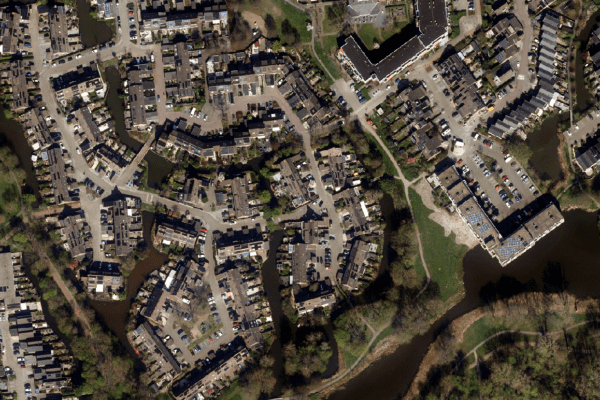
Arjan van Etten is a geoinformation consultant for the municipality of Capelle aan den IJssel. Together with his team, he maintains all of the city’s geodata and ensures that the city is properly mapped across various themes, such as the energy transition. “The city council promised the city that 70,000 solar panels would be installed by 2023. And a few years ago, they asked us how far along we were with that and what else they could do to fulfill that promise.” To provide a good answer, they needed to determine how many solar panels had already been installed on the roofs of Capelle aan den IJssel and where exactly they are located in the city.
Arjan van Etten is a geoinformation consultant for the municipality of Capelle aan den IJssel. Together with his team, he maintains all of the city’s geodata and ensures that the city is properly mapped across various themes, such as the energy transition. “The city council promised the city that 70,000 solar panels would be installed by 2023. And a few years ago, they asked us how far along we were with that and what else they could do to fulfill that promise.” To provide a good answer, they needed to determine how many solar panels had already been installed on the roofs of Capelle aan den IJssel and where exactly they are located in the city.
The team began by identifying, mapping the outlines, counting, and identifying the solar panels and determining when they were installed. Once all the data had been recorded, the municipality shared it with IMAGEM. IMAGEM Bozelie, Technology Director at IMAGEM , was able to use that data to develop and train a detection algorithm and automate the detection model. “After a few tries, we saw that the algorithm was getting smarter and was producing correct detections more often. This algorithm helps us detect panels when we receive new aerial photos, and that saves us a lot of time.”
Helping each other
The automatic detection of solar panels provides valuable insights for the municipality and the Van Etten team. “We not only know where the solar panels are currently located and how many there are, but also whether they are mainly on residential homes or commercial buildings. This allows us to see where there is still room for growth.” And the 2023 target? “We’ve developed a heat map that shows us where the panels are installed and when. We’re seeing solar panels appear more frequently and at a faster rate, especially over the past two years. If that upward trend continues, we can reach the target of 70,000 panels. That’s reassuring for the municipal council.”
The municipality of Capelle aan den IJssel has invested in the research and development of its own remote sensing for detecting solar panels. The municipality would like to share this model with other municipalities in the Netherlands through DELTA. Van Etten: “We believe it is important to share such information and insights with other municipalities so that they don’t have to go through the same lengthy process, but can instead jump right in.”
More information
Niels is the Government Market Manager at IMAGEM. He helps government agencies continuously work smarter and more effectively, and fulfills his role by supporting organizations in solving their challenges. Want to learn more? Send Niels an email or send a message via our contact form.

Niels van de Graaf
Government Market Manager