
“We value your opinion” or “Help us improve our services”
We’ve all been there. You’ve made a purchase online, and after receiving the item, you get an email asking you to rate your experience. And that’s not even mentioning the many forums where countless people share their opinions. Their reviews aren’t always eloquently worded, but they’re often very clear.
In short, we have an opinion on just about everything—or feel compelled to have one. I couldn’t care less about either the former or the latter. I don’t need to have an opinion on everything. And it would be good for our relationships with one another if our fellow citizens were a little more reserved when it comes to forming opinions.
And then there was Check M.App. A web application for assessing changes in our living environment. Where everything revolves around the question, “What do you think?”
What do you think?
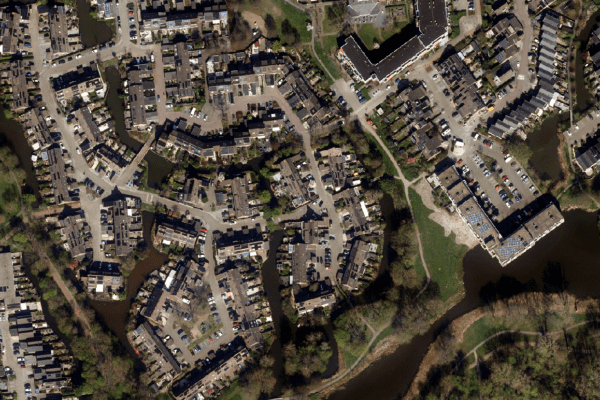
Our environment is constantly changing, and we need to respond to those changes—whether by taking action or simply documenting them. In the past (and even today), we had forest rangers, inspectors, surveyors, and enforcement officers. During their rounds, they would identify changes that required attention and often followed up on them themselves.
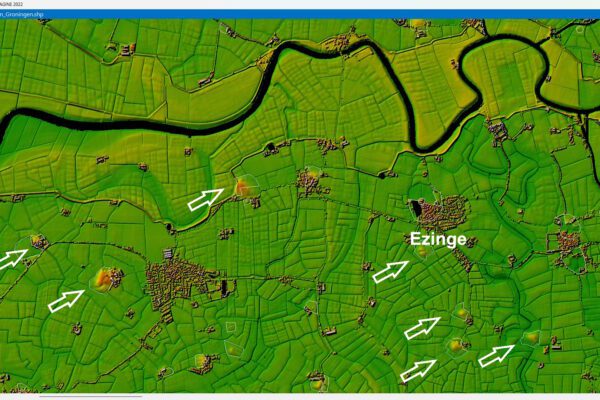
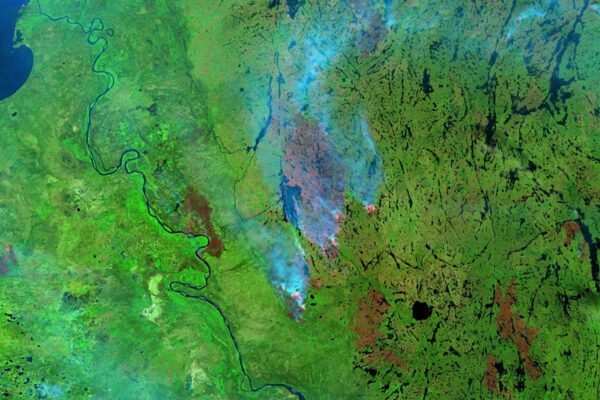
Modern techniques such as remote sensing aerial and satellite imagery) are increasingly being used for this purpose, with automated analyses performed on the data. And these analyses almost always identify changes. Unfortunately, however, not all changes are created equal. Sometimes a detected change needs to be followed up on, while others do not. Automatic detection can get you a long way, but there will still be changes that require someone with local knowledge to assess whether the change should be followed up on or ignored.
Swiping on Tinder
How can you make this kind of assessment as easy as possible? We drew inspiration from the popular dating app Tinder. It could be called perfection incarnate when it comes to a quick “look-click-done” assessment, allowing women or men to be swiftly ruled out as potential dates. The goal is to end up with only those women or men who are worth pursuing.
Check M.App try geotindering
And with that in mind, we Check M.App . Quickly assess changes automatically detected in outdoor spaces through a process of “geo-tindering” (gindering?), so that you’re left with only the changes that require “action.”
And how does that work? First, all detected changes are categorized and assigned to subject matter experts. Next, a change is displayed in the context of the surrounding area and the “decision data” in a way that is as informative and clear as possible, so that an assessment can be made with a single glance and a single click. After that, the process repeats itself. In other words, the ultimate implementation of the “look-click-done” principle.
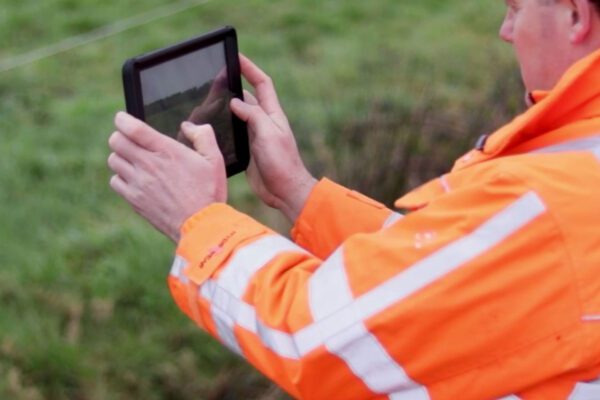
And when you want to take a quick look on-site to see what’s really going on, you can use a panoramic photo to scan the area and quickly apply essential human judgment to identify only the changes that actually require action. These changes are then automatically made available to the rest of the organization via a web service, a mobile app, or even a file that can be used to initiate specific follow-up actions.
In short, Check M.App ideal for quickly and efficiently “capturing” automatically derived changes to outdoor spaces from any source and making them immediately usable.
More information
Tjip is a business consultant at IMAGEM. As a consultant, he helps organizations—such as water authorities—find answers and solutions to spatial challenges, where the key lies in the smart application of location intelligence. Want to learn more? Send Tjip an email or message us via our contact form.

Tjip van Dale
Business Consultant